Every week, a fresh list of companies to contact.

Prospecting by hand eats a whole morning: someone works search after search, area by area, copying names into a spreadsheet that's stale in two weeks, and half the contacts turn out to have been in there already.

Studiminds Scout · Restaurants, city area

This is how your list grows on its own, week after week.

Name the industry and the area. Once.

Restaurants across a region. Dental clinics in a city. Estate agents in a district. You define the profile of who you want to reach, and that search runs itself from then on, with nobody having to revisit it.

  • Profile defined by industry and area
  • The search repeats on a cadence, with no manual work
  • Every company arrives already scored, not as a raw list
  • No repeat contacts between deliveries
  • The profile is adjusted whenever your sales focus changes
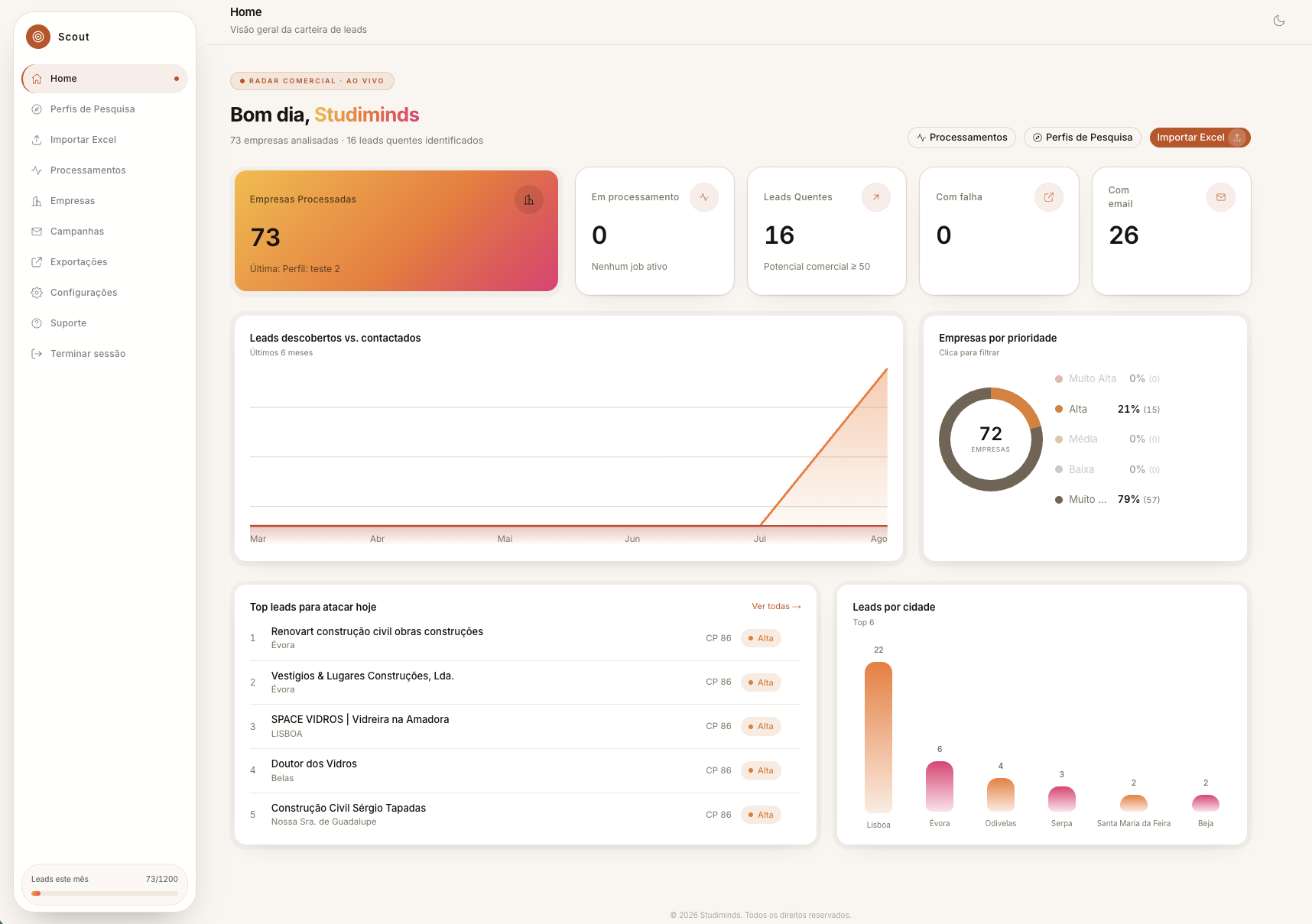
Studiminds Scout dashboard showing companies found and their sales priority

You know who to start with.

A list of five hundred companies with no context isn't worth much: someone still has to open them one by one to work out which are worth a call. Every company arrives with three indicators, so the team goes after what matters first.

Digital maturity
Where they stand

Whether they have a website, whether it's looked after, what presence they have online. It tells you a lot about the conversation you're about to have, and whether your offer fits them right now.

Potential
What it could be worth

The size and profile of the business, so you can tell whether the sales effort pays off or whether it's a contact that will burn time for nothing.

Urgency
Whether it's now

Signs that the problem you solve is already hurting them. It's what separates a contact for this week from one for six months out.

You define the profile. The companies arrive on their own, already scored.

Not a raw list to open one row at a time. A profile set once, and your dashboard filling itself, with the three indicators already worked out.

Prospecting profile
 
What shows up in your dashboard, in real time
New companies this week 0
Restaurants · City area

How this differs from buying a list.

A purchased database is a snapshot: it starts ageing the day it lands, and in three months it's worth half as much.

It runs itself, on a cadence

The search repeats as often as your sales cycle warrants. Every week there are new companies on the table, without anyone spending the morning hunting for them.

No duplicates

Only companies you haven't seen come through. The team doesn't waste time cross-checking files or risk contacting the same company twice, which is the fastest way to burn a lead.

For anyone who sells to other businesses.

It isn't a single-industry product. It suits any business whose routine involves hunting for new companies to approach, whether that's sales prospecting, partner recruitment or supplier sourcing.

Teams that need partners

Networks that grow by sign-ups: new partners, resellers or network points, sourced area by area every month.

Teams sourcing suppliers

Businesses that need to find and assess new providers regularly, instead of staying tied to the same ones forever.

B2B sales teams

People whose job is contacting companies, and who spend more time building the list than talking to anyone on it.

From first conversation to first list.

01

Define who you want

Industry, area, and what makes a good contact for you. If you already have good customers, we start from them to find the pattern.

02

Check plans and pricing

Pick the plan that covers the right industries and areas for you, at a cadence your team can actually work through.

03

It arrives without asking

From there the search runs itself and new companies land on the agreed cadence, already scored and free of duplicates.

What people usually ask us.

The data is company data from public sources: websites, directories and the information businesses publish precisely so they can be contacted. It isn't lists of personal data bought from third parties. Even so, the outreach you do next is your responsibility and has rules of its own: identify yourself, say where the contact came from, and let people ask not to be contacted again. We help set the process up so that's covered.
A purchased database is a file that starts ageing the day it arrives, with no context on where to start. Here the search is a repeating routine: you get new companies each time, already scored, and the ones you already had don't come back.
Scout isn't built for one industry. What decides whether it fits isn't your sector but your routine: if you sell to other businesses and someone there spends time hunting for who to contact, it fits. In the first conversation we'll tell you straight if we don't think it's worth it in your case.
Scout handles finding and scoring the companies. Writing and sending the messages can be built on top as part of an automation project, but that's a separate decision, and nothing goes out in your name without your approval.
The cadence is set with you, based on the team's real capacity. There's no point receiving three hundred companies a week if you only have hands to contact twenty. The point is to get what you can work through.
It's a monthly subscription with fixed prices, published on the plans and pricing page. Pick your plan based on how many industries and areas you need covered and how often you want deliveries, then activate and pay for it without talking to anyone first.

How long did your team spend searching this week?

Start receiving new companies every week, already scored, without spending your mornings searching.